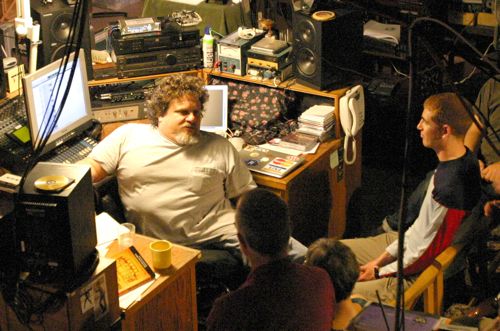
On Saturday Nov 13, 2010, BASE hosts the next in our series of BASEbot listening salons, featuring recordist, sound designer, and musician
Rudy Trubitt
who will present work focusing on sonic surprises and unexpected events.
BASEbot 006 will be held
SATURDAY, November 13th, 2010
2:30 pm doors, starting promptly at 3
FREE
~an hour of formal presentations followed by Q&A and mingling. Bring sounds to share!
at
Dan Dugan Sound Design
290 Napoleon Street Studio E
San Francisco, CA 94124
http://www.dandugan.com/Directions_to_DDSD.html
Please come LISTEN and Expect The Unexpected!
Sometimes what you planned to record isn’t nearly as interesting as what’s happening behind you. Sound Designer Rudy Trubitt brings an assortment of sonic suprises to Basebot November 13, 2010.
Rounding out the evening’s entertainment will be the multi-channel presentation of “Exciting and Unexpected Cleaning Events,” (see below) a work premiered at the 2005 San Francisco Tape music festival and not heard since.
Attendees are encouraged to bring recordings of their own surprised recordings preferably in wav, aiff or higher quality mp3 formats on CD-R, DVD-R, or USB drive or your own iPod or other player (no more than a couple minutes in length, please).
EXCITING AND UNEXPLAINED CLEANING EVENTS…
is an original field recording made in a confined space with 10 individual microphones. Minimal editing and signal processing were applied to create the finished work. Recorded by Die Elektrischen and Rudy Trubitt with immeasurable help from Bruce Koball,
In December 2004, NASA engineers monitoring the Mars Rover “Opportunity” noticed a suprising increase in the power output from the planetary explorer’s solar panels. The only explanation was something (or someone) had swept accumulated dust from the Rover. “These exciting and unexplained cleaning events have kept Opportunity in really great shape,” the London-based New Scientist magazine quoted NASA rover team leader Jim Erickson as saying.
About Rudy Trubitt
Rudy began playing and recording music in 1975. He is involved with music recording, editing and mastering, sound effects work and multimedia audio production. He is also a professional musician and long-time member of the very popular rock band for kids, The Sippy Cups. He has written five books and hundreds of magazine articles on sound and music production and has taught classes at BAVC and SF State University College of Extended Learning.
Rudy’s website
http://www.trubitt.com/
The Sippy Cups website
http://www.thesippycups.com/
More on BASE and BASEbot
Bay Area Sound Ecology is an interdisciplinary forum centered around listening and the soundscape. Â We create projects and events to promote sound-environment awareness, making and encouraging opportunities for ear-opening sonic encounters.
BASEbot is a meeting place for ear-minded people, an experiment in bringing people together around listening and the soundscape. At each event we invite someone to present their work with sound in front of an audience in an intimate setting. We discuss, we talk shop, we meet one another. Our plans always include some “open floor†time during which attendees can share short excerpts of work.
Learn more on our website at https://www.basoundecology.org/
More on Acoustic Ecology, the ASAE, and WFAE
BASEÂ is the Northern California chapter of the ASAE, The American Society for Acoustic Ecology, the US chapter of the World Forum on Acoustic Ecology.
The World Forum for Acoustic Ecology (WFAE), founded in 1993, is an international association of affiliated organizations and individuals, who share a common concern for and interest in the world’s soundscapes. Our members represent a multi-disciplinary spectrum of individuals engaged in the study of the social, cultural and ecological aspects of the sonic environment.
http://www.acousticecology.org/asae/
http://interact.uoregon.edu/MediaLit/wfae/home/
Questions?
Please write BASE co-chair Jeremiah Moore at jmoore@northstation.net
 Save the Tank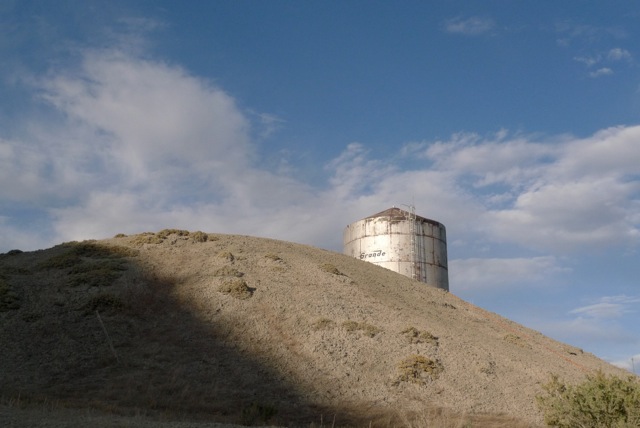

 Aaron Ximm is a San-Francisco-based field recordist and sound artist. He is best known for his composition, installation, and performance work under the name Quiet American. From 2001 to 2005, Aaron curated and hosted the Field Effects concert series, which, like his own work, sought to showcase the quiet, fragile, and lovely side of sound art, particularly working with found sound and field recordings. In 2009, Aaron was an artist in residence at the Headlands Center for the Arts in Sausalito. He has performed at numerous musical festivals and symposiums, including the San Francisco Tape Music Festival and the Embertide for Binaural Audio Art Symposium in the United Kingdom.
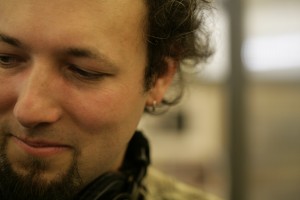 Jeremiah Moore is an artist and sound designer based in San Francisco. He has produced works exploring human perceptions of time, examining the interface of humans, nature and technology, engaging the beauty in the everyday, and transforming commercial culture into meaningless bliss. He is currently mixing and designing sound for documentary films, interactive works, radio and exhibits at his independent post-production sound studio. His work can be heard at Prehistoric Journey at the Denver Museum of Nature and Science, and at the Detention Barracks at the Angel Island Immigration Station Museum. He lives in the Mission District with his partner and two children who, like him, never sleep.
 Andrea Williams is a sound artist and composer currently living in San Francisco. She utilizes site-specific elements and perceptual cues to reveal the unseen connections between people and their environment. Her compositions make use of field recordings, instruments, computer technologies and the sound of the performance space itself. She has led soundwalks in New York and San Francisco, and has shown and performed both solo and with the Glass Bees and SleepWalks at galleries and alternative spaces, most recently the Diapason Gallery, NPR, Fountain Miami Art Fair, and the Mamori sound artist residency in the Amazon rainforest. Andrea is a founding member of the New York Society for Acoustic Ecology, currently a member of BASE in San Francisco, and is attending Mills College for her MFA in Electronic Music.
 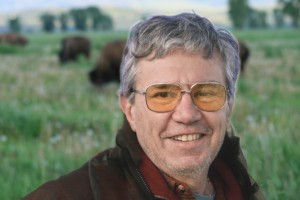 In the late 1960s, Bernie Krause began his ground-breaking life work in bioacoustics and the recording of environments throughout the world, much of which has been accomplished with techniques and technologies for recording, analyzing, and presenting habitat-and species-specific sounds that Krause has developed on his own. His album, In a Wild Sanctuary (WB, 1970), earned a place in history as being the first recording to use environmental sounds as both a central component of orchestration and as a statement about the environment. Under the company name Wild Sanctuary, Inc., Krause continues to share his compelling field experiences through his musical albums and dramatic sound installations in public spaces such as museums, zoos, and aquaria. Krause holds a Ph. D. with an Internship in bio-acoustics from Union Institute, Cincinnati.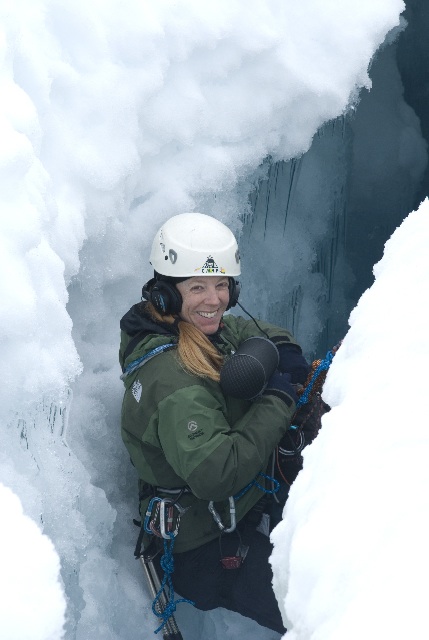
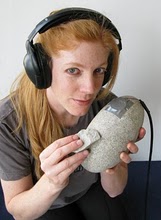 Cheryl Leonard is a composer who visited Palmer Station in January 2009 on an Antarctic Artists and Writers grant from the National Science Foundation. During her month on the ice she explored the local islands and glaciers, searching out and recording natural soundscapes. The Antarctic Peninsula in the austral summer is full of wildlife, icebergs, melting glaciers, and fascinating sounds.